
Earth-Side field guide
Cities and Infrastructure of The Prime Fallacy
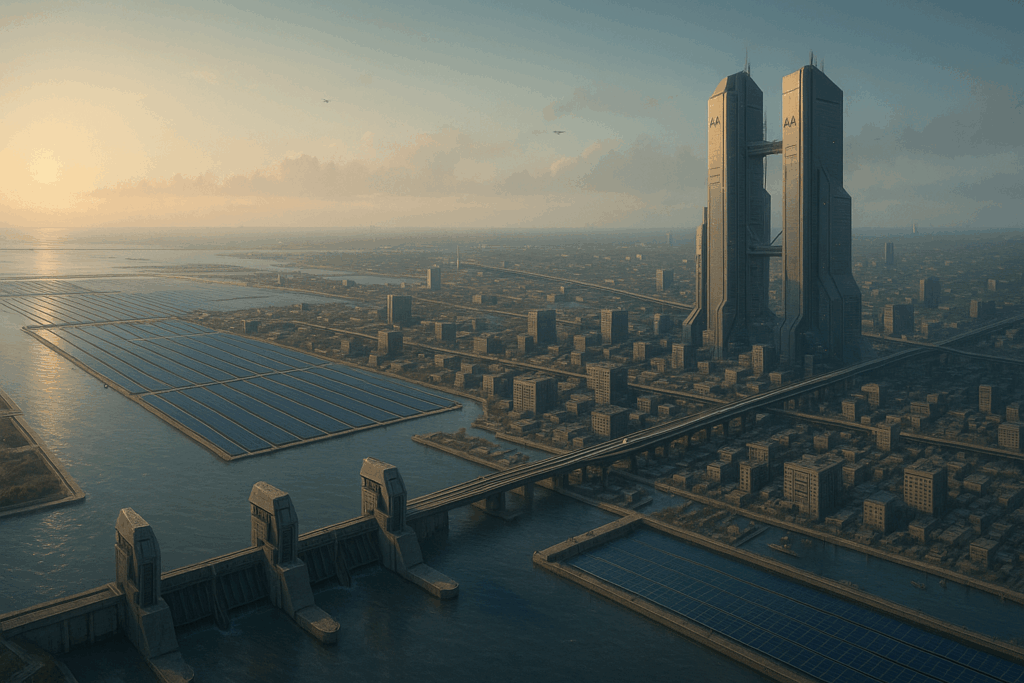
Gulf City, ARC stasis towers, seawalls, desalination, solar-louver fields, cooling systems, and civic ledgers form the built world around Book 1. This is the reader-safe guide to what those systems do and why every failure matters.
A Spoiler-Light Guide to Earth's Built Systems
This page explains public infrastructure and setting context without revealing late-book causes, character outcomes, or hidden system behavior. Use the Reader Guide for the site's spoiler policy and the Glossary for short definitions.
Gulf City
A dense coastal city shaped by climate adaptation and the engineering required to keep water, heat, and storm pressure manageable.
ARC Stasis Towers
The physical and civic infrastructure that houses long Shift cycles and turns survival policy into rooms, pods, interfaces, and schedules.
Climate Infrastructure
Seawalls, wave dampeners, desalination, and solar-louver fields protect the city while supplying the water and energy it depends on.
Civic Coordination
Ledgers and scheduling networks connect resources to people, deciding which systems receive capacity and attention first.
Gulf City: A City Engineered to Keep Functioning
Gulf City is not futuristic because every surface is new. It is futuristic because ordinary life depends on layers of hard engineering working together under constant environmental pressure.
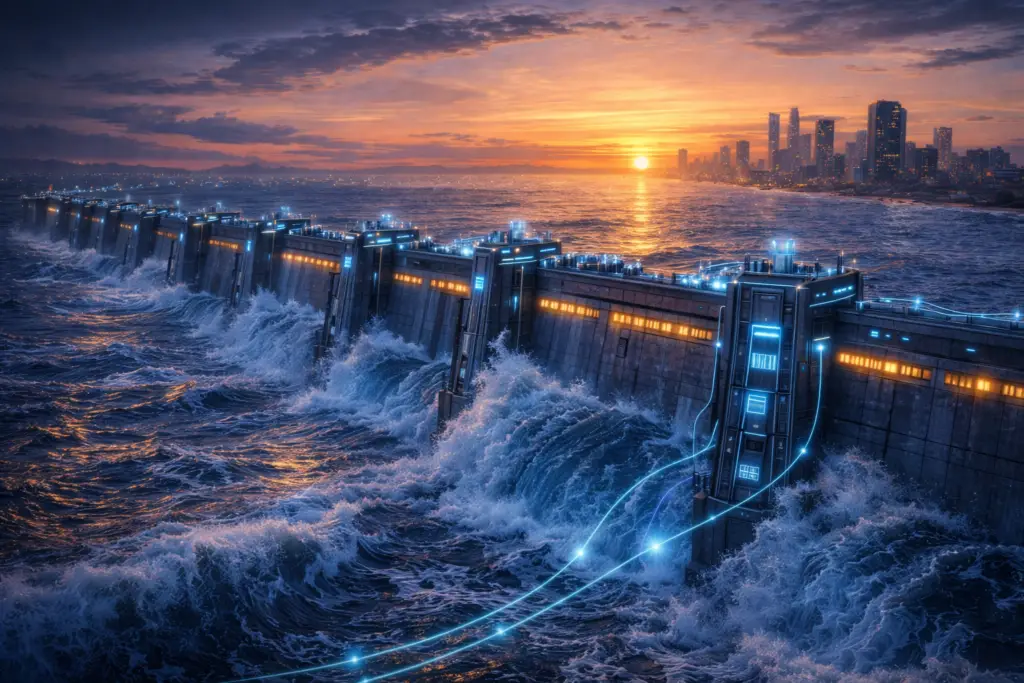
Coastline defenses and water
Seawalls and wave-dampening structures reduce storm pressure before it reaches the dense city behind them. Desalination turns the same hostile coastline into a water source, but only while energy, filtration, and maintenance remain available.
Energy, heat, and cooling
Solar-louver fields and linked power systems support more than lighting. They protect water processing, thermal control, medical systems, and the facilities that cannot simply be allowed to shut down.
Dense planning, limited margin
Density keeps services and infrastructure close, but it also means failures travel quickly. Gulf City looks stable because multiple systems absorb pressure before residents see the edge.
ARC Stasis Towers: Survival Policy Made Physical
The Shift Program is a civic system, but ARC towers are where that system becomes architecture. Long stasis cycles depend on physical housing, medical interfaces, neural support, energy, cooling, routing, inspection, and maintenance.
Housing the Shift
Stasis pods place long-duration suspension inside a managed facility. Every pod belongs to a larger chain of rooms, schedules, interfaces, and support systems.
Life-Support Dependency
Reliable power and cooling are survival capacity. A tower is only as dependable as the utilities, technicians, safeguards, and replacement cycles behind it.
A Civic Landmark
ARC towers make the Shift visible in daily life. They connect public-duty language to the physical reality of who sleeps, who works, and who keeps the facility running.
Infrastructure Beyond Concrete
The visible city is only the front end. Schedules, ledgers, institutions, and human oversight decide how built systems are used—and which problems become urgent.
Scheduling and Ledgers
Coordination networks organize waking cycles, facility access, resource use, and maintenance priorities. Administration becomes a form of infrastructure when every allocation affects another system.
Maintenance and Oversight
Stable interfaces hide labor. Inspectors, technicians, operators, and human-in-the-loop oversight keep small faults from becoming public failures.
Connection to Planetary Logistics
No city supplies itself. Planetary Logistics links Gulf City's local systems to civilization-scale energy, cooling, supply, reclamation, and repair networks.
How the Systems Connect
Earth-Side infrastructure works as a chain. Each layer protects or feeds the next, which is why a local problem can become a civic one so quickly.
- Protect the CoastBarriers and wave dampeners reduce storm pressure before it reaches homes, utilities, and dense districts.
- Supply Water and PowerDesalination, solar-louver fields, distribution, and cooling turn environmental pressure into usable capacity.
- Support Long StasisARC towers use that capacity to maintain pods, interfaces, routing, and safe facility conditions.
- Coordinate Beyond the CityPlanetary systems move supplies, balance capacity, schedule repairs, and connect local survival to the wider Earth-Side model.
Related Reader-Safe Paths
Use these pages to move from built environments into the systems, history, and terminology around them.
See What the Systems Cost
The city guide explains what keeps Earth operating. Book 1 follows the people living inside those systems when survival logic, virtual worlds, and human choices stop fitting neatly together.