
A genre guide / By Aaron Lytal
LitRPG vs GameLit vs Progression Fantasy
LitRPG makes RPG mechanics visible: levels, stats, skills, and the rules behind them. GameLit uses game elements to shape the story, without necessarily tracking detailed stats. Progression fantasy focuses on characters growing stronger or more skilled.
These genres overlap, but progression fantasy doesn’t need game elements, and GameLit doesn’t have to be about getting stronger.
See the difference in action: try one encounter in three genres.
About the author / Spoiler-light examples / Updated October 2026
Explore: The differences / Try the genre switcher / How they overlap / Book examples / The Prime Fallacy / FAQ
01 / The definitions
What's the difference?
A book can fit more than one of these labels. Here's what each one tells you to expect.
01
LitRPG
Follow the stats and skills.
LitRPG (Literary Role-Playing Game) fiction makes RPG mechanics explicit: levels, attributes, classes, skills, or equipment effects. Those rules shape choices and consequences.
Look for: a character build you can follow.
Not required: a VR headset, constant stat tables, or a literal video game.
02
GameLit
Read a story shaped by games.
GameLit uses games or game-like elements to shape the story. Virtual worlds, objectives, and game rules can matter without detailed character sheets.
Look for: game elements that shape the story.
Not required: a quest to become progressively more powerful.
03
Progression Fantasy
Watch a character get stronger.
Progression fantasy puts growing in power or skill at the center of the story. Characters train, learn techniques, develop their magic, and work past their limits.
Look for: meaningful steps toward greater power or skill.
Not required: levels, menus, XP, or game mechanics.
The key is growth in capability, not simply becoming wiser. See Andrew Rowe's explanation of progression fantasy.
02 / Try the genre switcher
The same encounter, three ways
The bridge ends at a sealed gate. Its armored guardian has defeated the adventurer before. Choose a genre below to change how the same challenge is told.
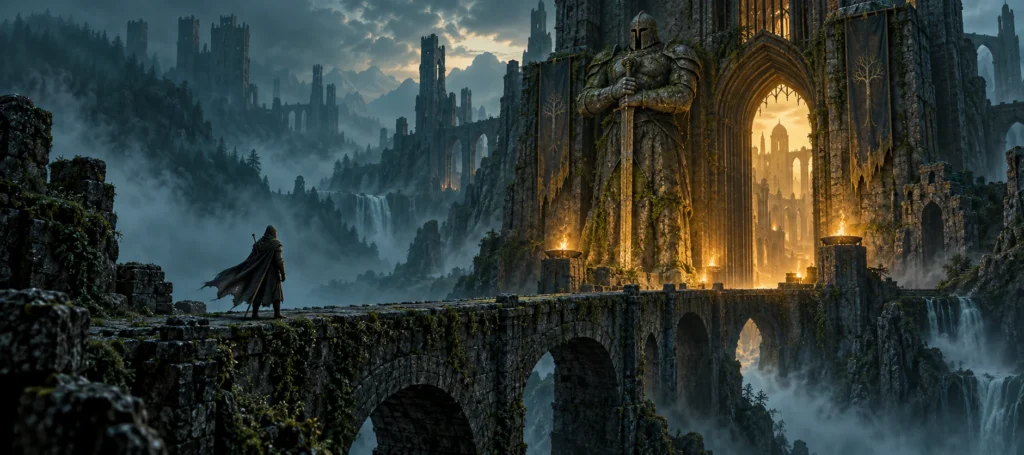
These short scenes were written for this guide. They aren't excerpts from the books below.
Version 1 / LitRPG
Mara's stats affect her choices
Mara had 38 stamina left. Shield Break cost 20, and her new gauntlets reduced its cooldown to six seconds. She let the guardian's first strike pass, spent the stamina, and watched ARMOR FRACTURE (4s) appear above its shoulder. One clean hit before the debuff expired.
The LitRPG part: You know Mara's stamina, what her skill costs, how her equipment helps, and how long she has to act.
The focus changes from stats, to game rules, to training. A novel can use all three.
Want to read a scene from my book? Try the opening of The Prime Fallacy.
03 / The overlap
How the genres overlap
Does the story use game elements? Is getting stronger a major part of it? The answers help explain why these labels often go together.
Game elements + growing stronger
GameLit and progression fantasy
A character can gain power in a world shaped by game rules. If the story also shows explicit RPG mechanics, LitRPG fits too.
Game elements + another main focus
GameLit without progression fantasy
A mystery in a virtual world might be about solving a puzzle, protecting a friendship, or escaping. The characters don't have to gain power for the story to work.
Growing stronger + no game elements
Progression fantasy without GameLit
A fighter can gain power through the world's own magic or training methods. Stages of training don't automatically make those methods game mechanics.
What does "crunchy" mean?
"Crunch" means how much mechanical detail you get: stats, build choices, cooldowns, and the cost of using skills. Some readers want to track all of it; others prefer fewer numbers. A progression fantasy can also explain its magic in detail without using game rules.
Read more about hard vs soft LitRPG.
04 / Book examples
Book examples
The first five examples reflect how I read these books. Cradle adds a contrast: progression fantasy without a game system.
Game elements without a stat-sheet focus
Ready Player One / Ernest Cline
I think of Ready Player One as GameLit. The OASIS and the hunt for its creator's prize put games at the heart of the story, but you don't need to follow a detailed RPG character sheet to enjoy the adventure.
Stats and story across a series
Dungeon Crawler Carl / Matt Dinniman
Dungeon Crawler Carl is one of my favorite books. As the series goes on, I find myself paying less attention to the stats and more attention to Carl, Donut, and the story around them. Its GameLit and progression fantasy elements stand out more to me.
It still has its LitRPG mechanics; what changes is where my attention goes.
Ratings make growth visible
Iron Prince / Bryce O'Connor & Luke Chmilenko
Iron Prince is science-fiction progression fantasy, but its detailed ratings give it a very LitRPG feel for me. Reidon Ward’s Combat Assistance Device lets you follow his growth as he trains and improves.
Lots of stats and system detail
The Primal Hunter / Zogarth
The Primal Hunter is another book I'd point to for crunchy LitRPG. Jake's stats, skills, and progress get plenty of attention. If you like following the numbers as a character gets stronger, this is the kind of detail I mean.
Spell learning you can measure
Mark of the Fool / J.M. Clarke
Mark of the Fool reads primarily as progression fantasy to me. When Alex tracks his spell-learning progress in percentages, certain passages have the numerical detail I associate with LitRPG. That makes his learning easy to follow, even though the world isn’t a game.
Progression through the world's own magic
Cradle / Will Wight
In Cradle, Lindon works to grow stronger through the sacred arts. His progress comes from the world's magic and training methods, without an RPG character sheet.
Andrew Rowe discusses Cradle as a progression example; Will Wight on introducing the series.
For more places to start, explore books for LitRPG readers.
05 / Find your reading style
What pulls you into a story?
Your preference / Stats and builds
You like knowing how the build works
You want to know what a skill does, how much it costs, and why one build works better than another. Seeing those details helps you follow the character's decisions.
Try: The Primal Hunter for stats and system detail, Iron Prince for ratings you can follow as the character trains, or Defiance of the Fall for class and skill systems mixed with cultivation.
Compare the books / Hard vs soft LitRPG
Try an opening with visible skills and tactical choices: The Prime Fallacy sample.
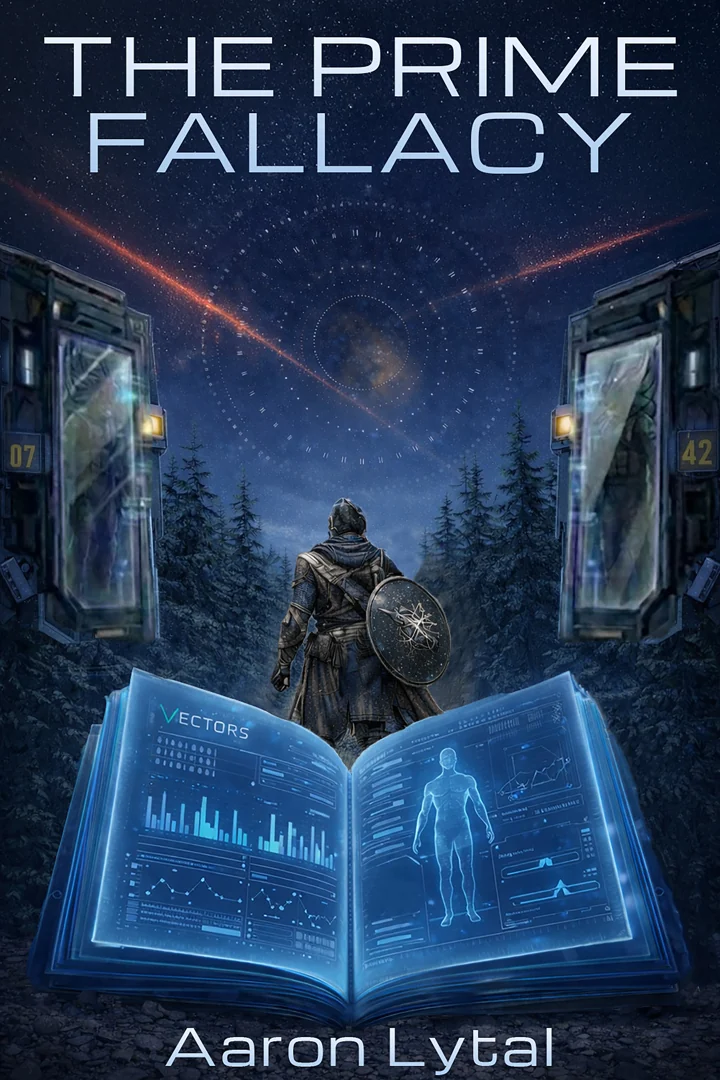
From the author of this guide / Book 1
The Prime Fallacy
A science-fantasy adventure with RPG mechanics and a player who is used to going it alone.
Roland Kurt lives in an AI-managed future and spends his nights gaming. He likes earning a victory on his own, and he doesn't appreciate his personal AI managing the rest of his life.
The sample includes the prologue and Chapter 1. Roland's chapter opens with a solo raid, then follows him back to everyday life with AL, his personal AI.
Why I wrote it: I wanted to offer a way into LitRPG through the science fiction, fantasy, and game-inspired stories I love. - Aaron Lytal
06 / Frequently asked questions
Common questions
What is the difference between LitRPG and GameLit?
GameLit uses games or game-like elements to shape the story. LitRPG shows explicit RPG mechanics, such as attributes, classes, skills, and levels, and is commonly treated as part of GameLit. Some LitRPG books show far more detail than others.
Can progression fantasy have no game elements?
Yes. Characters can gain power through their world's magic, martial arts, training, or discoveries. That growth needs to matter to the story, but it doesn't need XP, menus, or a video-game setting.
Does GameLit have to be progression fantasy?
No. Game rules can shape a mystery, a competition, or an escape story. The main goal doesn't have to be getting stronger.
Does a book stop being LitRPG when it shows fewer stats?
Not automatically. An established RPG system can continue to govern the story even when the prose spends less time explaining it. A series may change its emphasis without changing all of its genre labels.
What does "crunchy" mean in LitRPG?
It means lots of mechanical detail: stat values, calculations, build choices, skill interactions, and resource costs. There's no agreed cutoff for how many numbers count as crunchy. A sample will give you a better feel for it than the label alone.
Is every fantasy with a powerful hero progression fantasy?
No. A powerful hero isn't enough on its own. Progression fantasy spends a lot of time on how the character becomes stronger or more skilled. Becoming wiser, or getting one late power-up, doesn't necessarily make a book progression fantasy.
Is LitRPG always set inside a video game?
No. RPG-style rules can operate in a virtual game, a transported character's new world, or a reality reshaped by a system. The explicit mechanics matter more to the label than whether the setting has a login screen.
Where does The Prime Fallacy fit?
It blends LitRPG mechanics, GameLit worldbuilding, science fiction, and fantasy. I wrote it as a way into that mix. Read the opening chapter to see whether its voice and mechanics suit you.
Select a question to expand its answer.
About the author
Written by Aaron Lytal, author of The Prime Fallacy.
Keep exploring: Hard vs soft LitRPG / Books for LitRPG readers / Read The Prime Fallacy sample / Get book updates